
Leading Craig Field is not just a job for Ryan Corrigan — it is a mission rooted in service, history and the belief that Selma’s best days are still ahead.
Stephen Dawkins | Special to the Times-Journal
Leading Craig Field is not just a job for Ryan “Rider” Corrigan — it is a mission rooted in service, history and the belief that Selma’s best days are still ahead.
Corrigan, a retired Air Force colonel and longtime fighter pilot, was recently named executive director of the Craig Field Airport and Industrial Authority. The role brings him back to Selma, where he was born in 1977 at Vaughan Regional Medical Center, at the tail end of Craig Field’s time as a military pilot training base.
“This is home to me,” Corrigan said. “And like I told the [Board of Directors], I spent 25 years in military aviation, doing combat tours, and when I retired I wanted to go do good things for good people.”
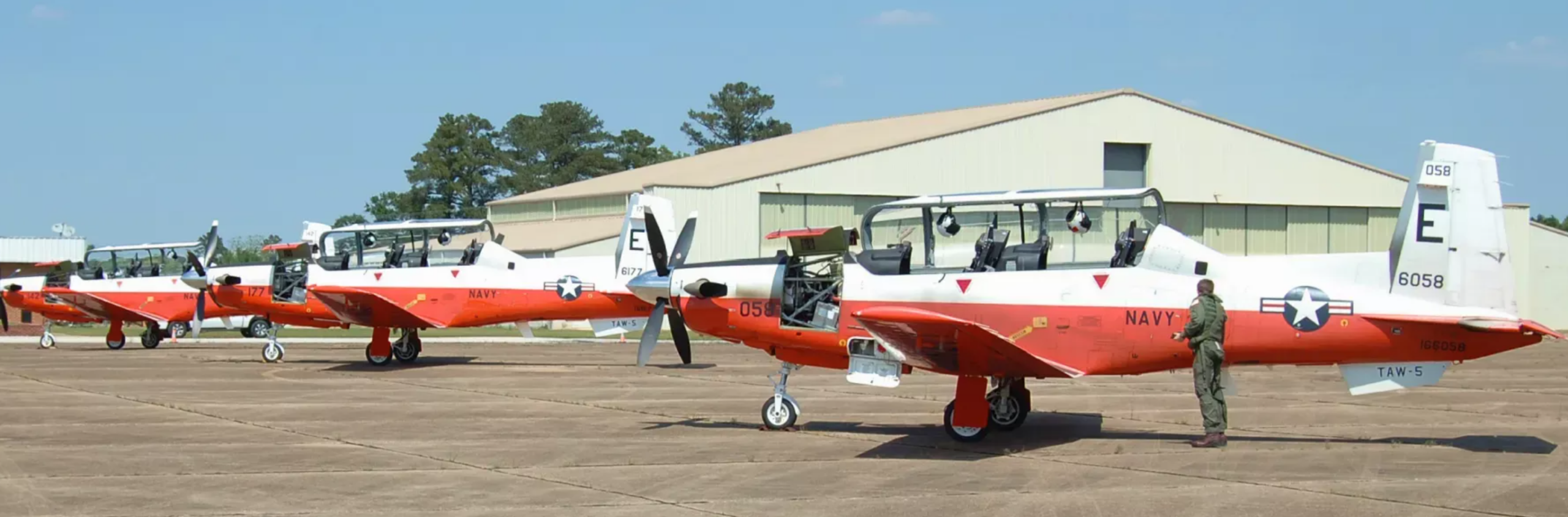
Craig Field closed as an active Air Force base a year or two after Corrigan was born, and his family moved away soon after. His father Jim was one of the last T-38 instructor pilots at the base. Corrigan’s memories of and connections to Selma never dissipated.
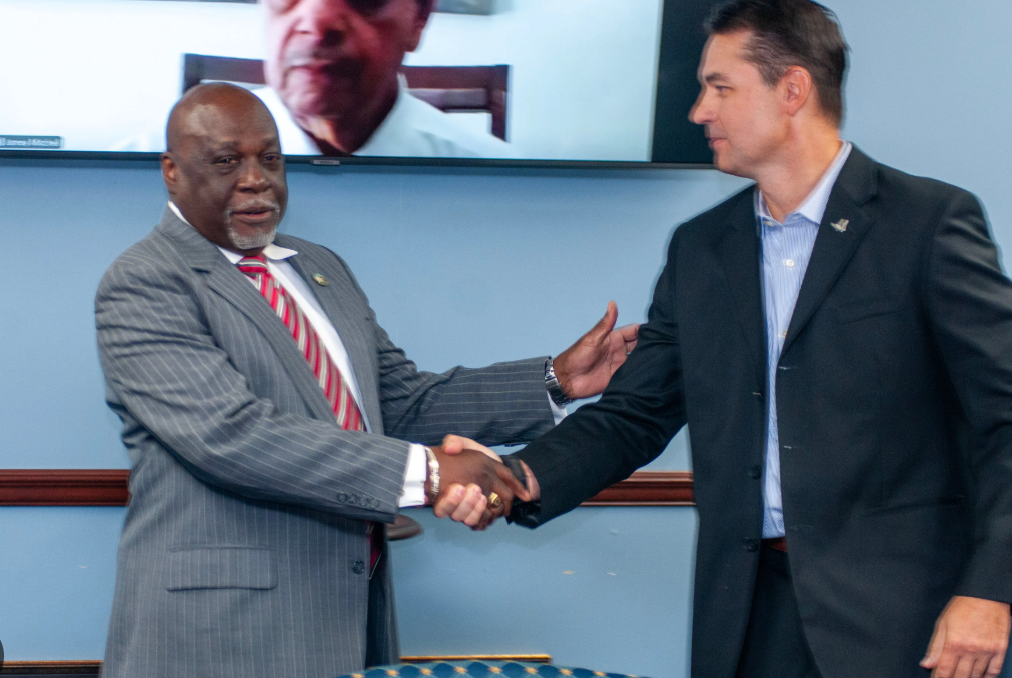
Jim Corrigan served as director of Craig Field for about seven years. As he approached retirement, it was important that the long-term strategic vision for the airport stayed on course.
Ryan Corrigan’s appointment certainly carries a sense of continuity. Father and son share strikingly similar backgrounds: both retired colonels, fighter pilots, airline pilots and organizational leaders accustomed to making quick decisions.
“Somehow, some way I managed to get the job,” Corrigan said about emerging from a field of highly qualified candidates.
At the time he was selected, Corrigan was living in South Carolina and had just retired as an Air National Guardsman, following a career that spanned active duty and Guard service. At the beginning of his military career, Corrigan completed pilot training at Columbus Air Force Base in Mississippi and was selected for the fighter track, ultimately flying F-16s.
Corrigan flew for two decades — an uncommon path in a career where many pilots move to desk jobs in less than half that amount of time. His service included multiple combat tours in Iraq, Afghanistan and other locations. Late in his active-duty career, he was chosen as a single-ship, low-altitude F-16 demonstration pilot for Air Combat Command, a role that combined flying with media and public engagement to showcase the Air Force’s mission and capabilities.
He stopped flying in 2020 and moved into a senior leadership role as a group commander overseeing a maintenance organization. The position gave him hands-on experience with logistics, supply chains and aircraft sustainment — experience he now sees as an asset for economic development.
“I’ve seen how to fly and how to fix,” he said. “That maintenance background allows me to see things from a different lens and a different perspective, and that aspect allows me to be flexible when it comes to bringing jobs into the city and the Authority. I’m looking to leverage that as an advantage.”
Corrigan said his experience has given him a global perspective. He has also flown as a commercial airline pilot for eight years, traveling extensively and observing how international airports operate and what makes them succeed.
Those lessons are shaping his vision for Craig Field as a low-cost, reliable partner for industry, and an intermodal logistics site that can drive job creation across Selma and the region.
“When I showed up here, I was amazed by the sense of pride that people took in this organization,” Corrigan said. “They fight hard through some significant adversity. They get out and they’re in the trenches every day.”
He pointed to employees who spend their spare time tearing down old buildings or planting crepe myrtles simply because they care about the place.
“That stuff is contagious,” he said. “It’s a force multiplier. We’re a diamond in the rough, and we’re quickly trying to get the rough off the diamond.”
Craig Field offers assets Corrigan believes are underutilized. The airport has an 8,000-foot runway — significantly longer than many regional airfields — along with hangars, rail access and proximity to major highways. It also offers proximity to other national aviation hubs.
“When you look at most airfields, most are 5,000-foot runways,” he said. “You can’t bring certain aircraft into that. It won’t work. Because of our runway length and location, this is an asset for the whole state of Alabama.”
Corrigan sees opportunities in emergency management, industrial testing, crisis response and military training, including agile combat deployment and expeditionary forces. From an industrial standpoint, he said, the surrounding property is well-suited for development.
“Any organization that wants to do major industry can make it work out here with little effort,” he said.
Workforce development is another priority. Craig Field already hosts an advanced air traffic control training tenant, and Corrigan hopes to expand that into a program that allows students to graduate high school, train locally at Craig Field and move into well-paying careers. Partnerships with local high schools, Wallace Community College and other institutions will be key.
“When you’re limited on your resources, you can’t have multiple entities fighting over crumbs,” he said. “I want us to work together to make the pie bigger.”
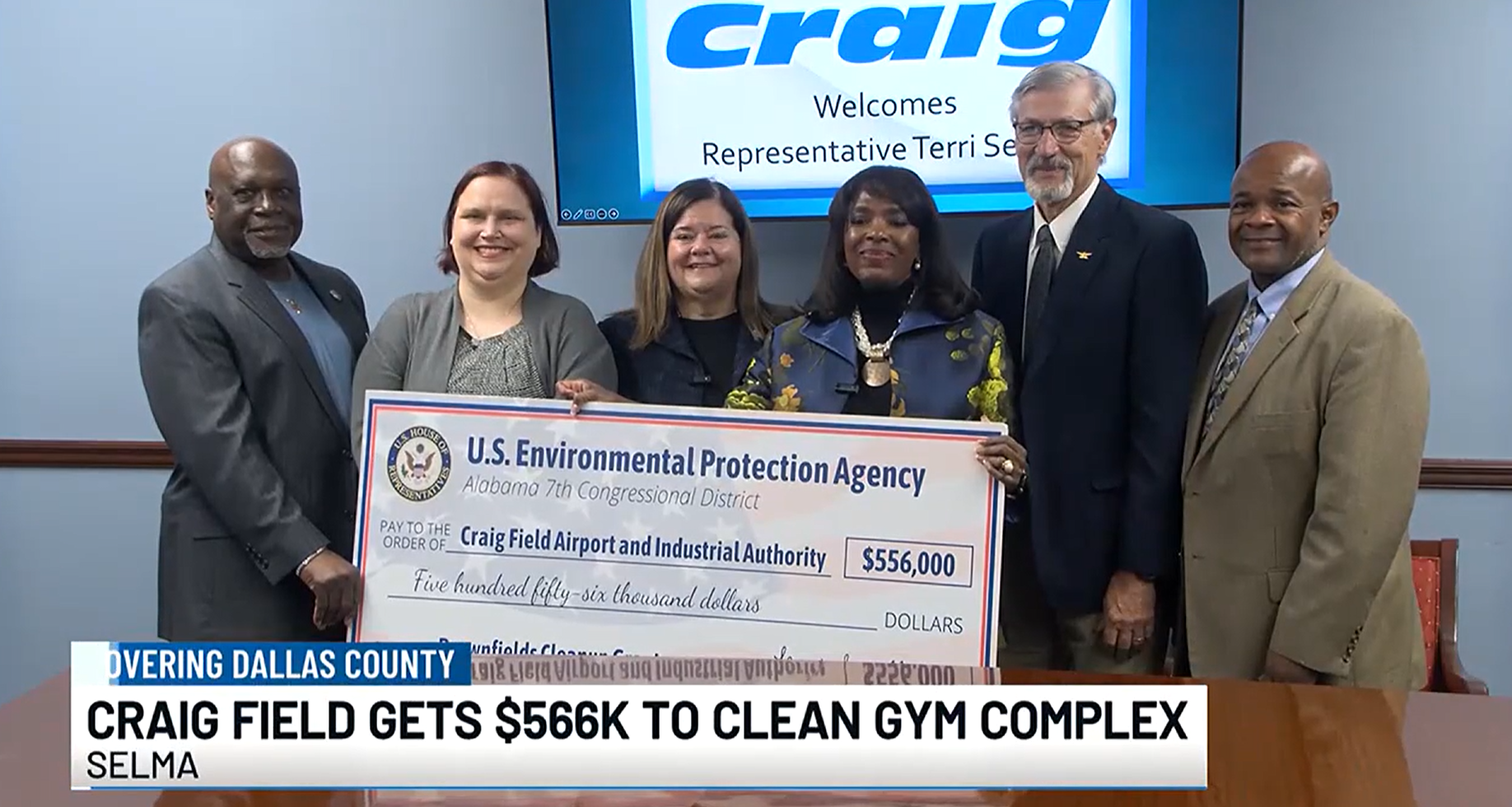
Corrigan said he is pursuing grants for facility refurbishment and plans a national marketing campaign to attract long-term partners across a wide range of industries.
“There is not a single industry that I wouldn’t be willing to talk to,” he said.
Beyond economics, Corrigan hopes Craig Field can inspire the next generation. He credits an air show — watching the Thunderbirds fly overhead — with helping spark his own interest in aviation. One day, he said, he would like to bring an aviation air show back to Selma, though it would require broad support and funding.